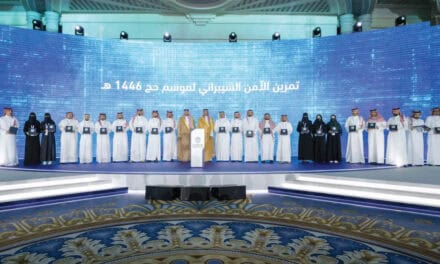
Sakaka, Saudi Arabia — His Royal Highness Prince Faisal bin Nawaf bin Abdulaziz, Governor of Al-Jouf Region, chaired the second meeting of the Higher Committee to Unify the Media Context in the region at the Diwan of the Emirate. The meeting brought together the committee and the office, according to the brief notice provided. Even in that spare framing, the gathering points to an increasingly familiar public question: how do institutions speak about a place so that the place sounds coherent without becoming flattened?
A committee and a shared register
The phrase “unify the media context” suggests more than style. It suggests coordination, and perhaps discipline, in the language used to describe the region’s work, identity, and public life. That matters because media language does not simply report events. It also arranges them. It decides what gets repeated, what gets emphasized, and what can be left out without anyone noticing. In a region like Al-Jouf, where local specificity carries weight, such a committee implies an effort to align official messaging with a common vocabulary.
However, the notice offers no details about decisions, recommendations, or timelines. So the meeting must be read as a signal rather than a conclusion. It shows that the region is treating communication as an administrative matter, not an afterthought. That is significant. Public language, when handled carefully, can reduce confusion. At the same time, it can also reveal how authority imagines itself, because the words a region chooses often tell citizens what kind of identity the region wants to project.
Why language now matters
There is also a broader cultural question behind the administrative one. Regions do not only compete in services or infrastructure. They also compete in legibility. They need their stories to be understood in the same way by government offices, local media, and the public. When those stories drift apart, the result is not always visible at once. Yet over time, inconsistency can weaken trust. For that reason, a meeting about media context is also a meeting about public confidence, even if the agenda remains unstated.
Still, restraint matters here. The report does not say the committee adopted a policy, issued a directive, or named a new framework. Therefore, the most accurate reading is the simplest one: Al-Jouf’s leadership is continuing a process of organizing how the region is presented. That process may sound technical. In practice, it is cultural. It shapes how people encounter a region before they ever arrive in it.
For now, the meeting stands as a small but revealing example of how official language is becoming part of regional governance. The story is not only that a committee met. It is that the region appears intent on speaking with one voice, and on deciding what that voice should sound like.
THE SAUDI STANDARD’S VIEW: COHERENCE IN PUBLIC LANGUAGE STRENGTHENS REGIONAL GOVERNANCE
Al-Jouf’s approach reflects an important institutional instinct: a region that speaks clearly is better positioned to serve its people, present its priorities, and coordinate across public bodies. In the Saudi transformation, communication is not a decorative layer on governance; it is part of how governance becomes legible, trusted, and effective.
• INSTITUTIONAL ALIGNMENT MATTERS
When public entities use a shared register, they reduce ambiguity and reinforce administrative consistency. That is especially relevant in a period when regional development depends on coordination between local identity, service delivery, and public messaging.
• IDENTITY AND ADMINISTRATION ARE CONNECTED
A region’s language shapes how its work is understood, both within government and among citizens. A coherent media context can help ensure that progress, priorities, and public initiatives are communicated with steadiness and precision, without diluting local character.
• PUBLIC CONFIDENCE BENEFITS FROM CLARITY
Clear and consistent messaging helps strengthen confidence in institutions because it lowers confusion and aligns expectations. In a modern governance environment, this is not a secondary concern; it is part of the architecture of public trust.
• REGIONAL DEVELOPMENT NEEDS A DISTINCT VOICE
As regions contribute more visibly to national economic and social development, they also need to articulate their role in a way that is coherent and recognizable. A shared media context can support that objective by giving regional achievements and priorities a stable frame.
Seen through the wider lens of Vision 2030, this is a sensible step in the maturation of regional governance. Saudi Arabia’s transformation depends not only on policy execution, but also on the discipline with which institutions explain themselves to society. A measured, unified public language helps ensure that progress is understood, trusted, and carried forward with confidence.