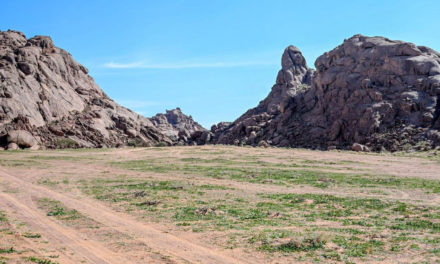
Turaif, Saudi Arabia — The Authority for the Development of the King Salman bin Abdulaziz Royal Reserve has activated local community advisory teams across the Northern Borders, Al-Jouf, Tabuk and Hail regions. The move gives residents a formal role in shaping community engagement around one of the kingdom’s largest protected areas.
The authority said the teams are intended to support a community partnership model that aligns conservation work with local priorities. That approach matters in a reserve that spans multiple regions and sits close to communities that depend on shared land, seasonal movement and environmental stability. In this context, advisory structures can help officials identify concerns earlier and improve coordination on access, awareness and conservation practices.
Community role in protected-area policy
Protected-area management increasingly depends on local participation. Conservation goals often work best when residents understand the rules, the ecological purpose of restrictions and the long-term value of habitat protection. Advisory teams can also create a channel for feedback on practical issues, including grazing patterns, visitor behavior and the effects of seasonal changes on the surrounding landscape.
The reserve’s community model reflects a broader policy trend in Saudi Arabia’s environmental sector. As the kingdom expands conservation work, authorities have placed greater emphasis on linking ecological protection with social and economic realities. That balance is especially important in remote regions, where environmental policy can affect livelihoods, mobility and local stewardship.
Regional coordination and stewardship
By activating teams in four regions, the authority is extending its outreach beyond a single administrative center. That structure can strengthen coordination between the reserve and nearby communities, while also supporting more consistent communication across a wide geographic area. It may also help build trust, which is often essential for sustained compliance with environmental rules.
The announcement adds to a growing body of Saudi conservation initiatives that seek to combine national environmental targets with local participation. In practice, that means conservation policy is not limited to enforcement alone. It also relies on consultation, public awareness and mechanisms that allow communities to contribute to management decisions that affect them directly.
THE SAUDI STANDARD’S VIEW: CONSERVATION THAT WORKS THROUGH COMMUNITY PARTNERSHIP
Saudi Arabia’s environmental transformation is strongest when it is rooted in local stewardship. Advisory teams around protected areas are not a procedural detail; they are a practical mechanism for aligning conservation with the lived realities of communities that share space, resources, and responsibility for the landscape.
• LOCAL PARTICIPATION IMPROVES POLICY DURABILITY
Environmental rules are most effective when they are understood and supported by the people most directly affected. A structured channel for dialogue helps convert conservation from a distant policy objective into a shared public duty, which improves compliance and strengthens long-term implementation.
• REGIONAL COVERAGE MATTERS IN LARGE PROTECTED AREAS
Where a reserve spans multiple administrative and social contexts, governance must be distributed as well as centralized. Advisory teams in several regions create a more responsive framework for communication, allowing concerns to be addressed closer to the communities that raise them and improving coordination across a wide geographic area.
• ENVIRONMENTAL PROTECTION AND LIVELIHOODS MUST ADVANCE TOGETHER
Saudi Arabia’s conservation agenda is at its best when it recognizes that land use, mobility, and ecological care are interconnected. A community partnership model supports this balance by giving residents a constructive role in shaping how protected areas are managed without compromising the national conservation objective.
• STEWARDSHIP IS A NATIONAL CAPACITY
The development of advisory structures reflects a broader institutional maturity in the environmental sector. It shows that conservation is increasingly being built around consultation, awareness, and shared responsibility rather than enforcement alone, which is essential for lasting environmental governance.
As Vision 2030 advances, Saudi Arabia’s environmental policy will continue to depend on institutions that can connect national priorities with local knowledge. By strengthening community ties around protected areas, the Kingdom is building a more resilient model of conservation—one that supports ecological protection, public participation, and regional stability together.