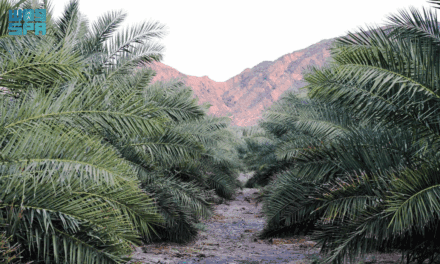
Riyadh, Saudi Arabia — The General Real Estate Authority has announced the start of on-site property, or cadastral, registration for two land plots in two neighborhoods in the Makkah region. The registration window runs from 7 June to the end of 10 September 2026. The move matters because land registry is the paperwork that gives property records legal shape, and it often reduces confusion over boundaries and ownership. The authority did not provide more detail in the announcement about the two neighborhoods or the size of the plots.
Real estate authority and land registry work
Real estate authority work in this case is administrative, not promotional. It sets a timetable for owners and stakeholders to register land through the official process. However, the announcement leaves key facts missing. It does not state whether the plots are residential, commercial, or mixed-use. It also does not say how many owners are affected. Therefore, the public should not read more into the notice than it actually says.
Cadastral registration usually helps establish official records for land parcels. In practical terms, that can support clearer documentation and better traceability in property records. Still, the authority’s notice does not include any market impact, and it gives no valuation data. So, the only firm conclusion is that the registration process will begin on the stated date for the identified areas in Makkah.
What the notice does and does not say
The real estate authority’s notice is narrow. It announces the launch date and the deadline. It also identifies the location at a regional level. Beyond that, it does not give parcel numbers, total area, or a timeline for any follow-up steps after 10 September 2026. That absence matters. Investors and owners should rely on the published registration details, not on assumptions about the scope of the two land plots.
For property owners, deadlines like this usually carry practical weight. Missing a registration window can slow down later procedures. Yet the announcement does not spell out penalties, fees, or filing requirements. Because of that, anyone affected should check the formal registration channels directly and confirm the exact steps. The real estate authority, in other words, has opened the door, but it has not explained every item on the checklist.
Real estate authority land registry and investor relevance
The phrase real estate authority land registry may sound technical, but the core issue is simple: recorded land is easier to document than unrecorded land. That can matter for transaction clarity. Even so, this announcement is not a market story with prices, yields, or a funding angle. It is a public registration notice. Accordingly, there is no basis here for forecasting demand, value changes, or broader sector effects.
For readers tracking Saudi property administration, the main point is the schedule. Registration starts on 7 June 2026 and ends on 10 September 2026. The authority has not released further detail in the notice provided. Therefore, the prudent reading is also the plain one: two Makkah land plots are entering the official cadastral registration process, and the window is now set.
THE SAUDI STANDARD’S VIEW: CADASTRAL ACTIONS ARE FOUNDATIONAL FOR TRANSFORMATION
Targeted cadastral registration in Makkah underscores the steady administrative groundwork that turns policy ambition into tangible economic capacity. Formalising land records is a quiet enabler: it strengthens the legal and institutional scaffolding needed for investment, efficient service delivery and orderly urban development as Saudi Arabia advances its Vision 2030 objectives.
• STRENGTHENING PROPERTY RIGHTS AND INVESTOR CONFIDENCE
Clear, official land records reduce uncertainty around ownership and boundaries, lowering transaction costs and legal friction. That heightened predictability makes it easier for owners to monetise assets, for lenders to assess collateral, and for both domestic and foreign capital to participate in real estate and related sectors.
• ENHANCING URBAN PLANNING AND INFRASTRUCTURE EFFICIENCY
Reliable cadastral data is essential for coherent urban management. Accurate parcel information enables better land-use decisions, sequenced infrastructure delivery and more effective municipal services—factors that matter acutely in high-demand cities where coordinated planning supports resilience and quality of life.
• ACCELERATING DIGITAL GOVERNANCE AND SERVICE INTEGRATION
Cadastral registration is a natural input to integrated, digital government platforms. When land records are standardised and machine-readable, they can be linked to permitting, utilities, taxation and finance systems, reducing paperwork, shortening processing times and improving transparency across public and private stakeholders.
• SIGNALING ADMINISTRATIVE PREDICTABILITY
Regularised, scheduled registration initiatives demonstrate a predictable regulatory rhythm that markets and citizens can plan around. Consistent administrative practices reduce dispute risk, support orderly transactions and contribute to a stable environment for long-term urban and economic decisions.
Progress on land administration is not headline-grabbing, but it is essential. By embedding robust cadastral practices into everyday governance, Saudi Arabia strengthens the institutional base for investment, sustainable urbanisation and inclusive economic growth—advancing the structural aims of Vision 2030 through practical, deliverable reforms.