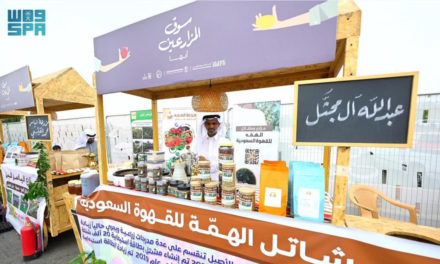
Riyadh, Saudi Arabia — The National Center for Palms and Dates said date markets across the Kingdom have received multiple varieties of fresh Bashayer dates as the harvest season began in all regions. The center said this arrival contributed to an increase in market supply and gave consumers access to early-season dates at a time when the crop normally moves from orchards to wholesale and retail channels.
The center identified Al-Rothana as one of the varieties that has achieved wide spread in date markets. It did not provide a national sales total in the text available, yet it said the broader flow of fresh dates reflects the season’s early momentum. In practical terms, that matters for growers and traders alike, because the first arrivals often set the tone for price, distribution, and consumer demand during the opening weeks of the harvest.
Seasonal supply reaches regional markets
Fresh Bashayer dates now appear in markets in all regions of the Kingdom, according to the center. That geographic reach indicates a fast early-season distribution pattern. It also shows how harvest timing in multiple regions can support steady supply, rather than concentrate deliveries in a single market. As a result, early harvest volumes can help stabilize availability while giving producers a wider commercial window.
Date production remains a significant part of Saudi agricultural activity, and the seasonal launch of fresh varieties carries economic importance beyond the farm gate. It affects transport, packaging, wholesale margins, and retail offerings. Moreover, the presence of several fresh varieties allows buyers to compare quality and maturity levels, which can influence demand as the season develops.
Market visibility for early varieties
Al-Rothana’s spread in markets suggests the variety has secured visibility among early-season offerings. However, the center’s statement focused on distribution rather than detailed grading or regional sales shares. Even so, the broad appearance of fresh dates across the Kingdom signals an active harvest phase and a market that is already adjusting to seasonal supply.
For consumers, the start of the harvest season usually brings a wider selection of fresh dates and a clearer view of price trends. For producers, it offers an early indicator of how the season may unfold in terms of demand and market absorption. In the coming weeks, the pace of arrivals will likely shape the commercial landscape for the rest of the date season.
THE SAUDI STANDARD’S VIEW: EARLY HARVESTS STRENGTHEN MARKET DISCIPLINE
The opening of the date season is more than a routine agricultural milestone; it is a test of how effectively the Kingdom’s farm-to-market channels can convert seasonal output into orderly supply, stable trade, and dependable consumer access. The early movement of fresh varieties across regional markets reflects a sector that remains central to agricultural value creation and domestic food availability.
• SEASONAL FLOW SUPPORTS PRICE FORMATION
When fresh dates enter the market early and broadly, they help shape the first signals of the season. That matters because initial supply conditions influence pricing, purchasing behavior, and wholesale expectations, especially in a crop where timing is closely tied to commercial returns.
• REGIONAL DISTRIBUTION STRENGTHENS MARKET BALANCE
Availability across all regions points to a distribution network capable of moving seasonal produce efficiently. This kind of geographic reach helps reduce concentration in a few hubs and gives producers a wider route to market while supporting more consistent consumer access.
• VARIETY DIVERSITY ADDS COMMERCIAL DEPTH
The presence of multiple fresh varieties increases market depth and gives buyers more choice as the season begins. For growers and traders, this diversity is important because it allows quality, maturity, and timing to play a larger role in market positioning and demand.
• AGRICULTURE REMAINS A VALUE-CHAIN INDUSTRY
The significance of the date season extends well beyond cultivation itself. It engages transport, packaging, wholesale activity, and retail supply, reinforcing the role of agriculture as a connected economic system rather than a standalone primary sector.
As the season progresses, the Kingdom’s date markets will continue to provide a practical measure of agricultural readiness, supply-chain coordination, and domestic market responsiveness. In line with Vision 2030, this kind of seasonal performance underscores the importance of a resilient food economy that links production strength with efficient distribution and sustained market confidence.