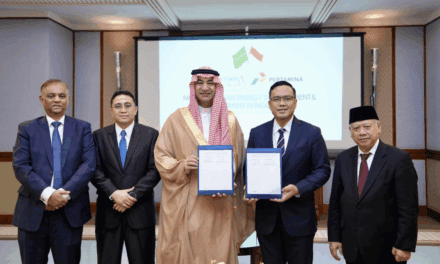
Riyadh, Saudi Arabia — Under the patronage of the Deputy Minister of Environment, Water and Agriculture, Engineer Mansour bin Hilal Al-Mushaiti, the National Program for Developing the Livestock and Fisheries Sector marked a new step in its localization effort.
The program said the move supports the development of biotechnology industries and aims to strengthen food security and sustainability. It placed the effort within a broader push to build domestic capacity in sectors tied to agricultural resilience and supply chains. The announcement did not provide additional operational details, timelines or financial terms.
Localization and sector capacity
Saudi Arabia has expanded its focus on food systems, livestock and fisheries as part of a wider strategy to reduce dependence on imports and improve the efficiency of local production. In this context, biotechnology can support animal health, improve production inputs and help sectors respond to climate and water constraints. However, any practical impact will depend on implementation, research coordination and industrial adoption.
The emphasis on localization also reflects a policy approach that links industrial development with national food objectives. That approach has gained weight as governments across the region seek to strengthen resilience in essential goods. In Saudi Arabia, agriculture and food security initiatives increasingly intersect with sustainability targets and resource management.
Strategic priorities
Fisheries and livestock remain central to that agenda. Both sectors face pressure from disease management, feed costs, water availability and changing environmental conditions. Biotechnology can contribute to solutions in each area, but the pace of progress depends on regulation, investment and technical capability. The latest step signals continued official attention to those priorities.
Saudi Arabia has repeatedly tied environmental policy to economic development. As a result, initiatives that improve local production capacity often carry significance beyond a single sector. They can influence employment, supply chains and the country’s longer-term food security posture. The new step in the program follows that policy direction and reinforces the government’s stated focus on sustainable growth.
THE SAUDI STANDARD’S VIEW: LOCALIZATION AS A NATIONAL FOOD SYSTEMS STRATEGY
Saudi Arabia’s food security agenda is entering a more sophisticated phase, one that increasingly ties industrial capability to national resilience. Biotechnology is not a peripheral add-on to this effort; it is becoming a practical instrument for strengthening domestic production, improving efficiency, and reducing structural exposure in essential supply chains.
• CAPACITY BUILDING MUST SERVE REAL INDUSTRIAL DEMAND
The value of localization in biotechnology will be measured by whether it translates into usable solutions for livestock and fisheries operators. Research, product development, and technical training must be aligned with sector needs so that scientific capacity becomes part of day-to-day production rather than a parallel policy objective.
• FOOD SECURITY NOW DEPENDS ON INNOVATION DISCIPLINE
Saudi Arabia’s approach reflects a clear understanding that food security is no longer only about sourcing and storage. It is also about disease management, feed efficiency, adaptive production, and resource-smart inputs. Biotechnology can support these priorities, but its effectiveness will depend on disciplined regulation and strong coordination across institutions.
• SUSTAINABILITY AND PRODUCTIVITY ARE NOW INTERDEPENDENT
The linkage between environmental stewardship and agricultural output is becoming more visible in the Kingdom’s policy architecture. In water-sensitive and climate-constrained sectors, technologies that improve productivity while easing resource pressure are increasingly central to long-term planning. This is where localization gains strategic importance.
• SECTOR RESILIENCE HAS BROADER ECONOMIC VALUE
Efforts that strengthen livestock and fisheries do more than support food supply. They reinforce domestic value chains, create room for specialized investment, and deepen the industrial base around essential goods. That broader economic contribution is consistent with a transformation agenda that seeks resilience alongside growth.
As Vision 2030 advances, the Kingdom’s food security strategy will continue to depend on building national capability in the sectors that matter most to daily stability and long-term sustainability. Steps that localize biotechnology within livestock and fisheries are therefore not isolated initiatives; they are part of a wider policy shift toward a more resilient, more self-reliant, and more technologically grounded economic model.