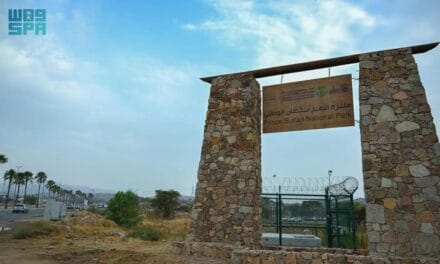
Riyadh, Saudi Arabia — The National Center for Wildlife Development has documented the largest known mass migration of the Asir Qara fish in the Kingdom, in the Wadi Turbah basin in western Saudi Arabia. The finding adds to the country’s scientific record on native aquatic species and their seasonal movement patterns.
The center said the documentation forms part of a broader effort to strengthen national knowledge of wildlife and to support conservation work. Such records can help researchers track species distribution, identify ecological pressures, and guide future field studies in freshwater habitats.
Scientific value of the record
Mass migration events can offer important clues about habitat conditions, water availability, and breeding behavior. In arid environments, freshwater systems often face pressure from climate variability and land use, which makes field documentation especially valuable. Accurate records also help build baseline data for future environmental assessments.
The Wadi Turbah basin lies in a region where ecological monitoring remains important for biodiversity protection. Therefore, documenting native fish movement helps improve understanding of local aquatic ecosystems. It also supports wider efforts to map species that are less studied than larger terrestrial wildlife.
Broader conservation context
Saudi Arabia has expanded environmental monitoring in recent years across wildlife, water, and ecosystem management. In addition, scientific documentation of native species has become more central to conservation planning. These records can inform habitat protection measures and guide targeted research in sensitive areas.
Moreover, the identification of a large migration event may encourage further study of the Asir Qara fish and the conditions that support its movement. That work can contribute to better management of freshwater resources and to a more complete picture of biodiversity in the Kingdom.
THE SAUDI STANDARD’S VIEW: SCIENCE-LED CONSERVATION STRENGTHENS NATIONAL RESILIENCE
Documenting native species behavior is not a peripheral environmental exercise; it is a strategic investment in the Kingdom’s ecological resilience. Each verified record adds to the scientific foundation needed to manage scarce water systems, protect biodiversity, and align conservation policy with long-term national development priorities.
• BASELINE DATA IS A POLICY ASSET
Reliable field documentation gives environmental planners and researchers a clearer basis for decisions. In a country where freshwater ecosystems are sensitive to natural variability, baseline data on species movement supports more precise protection measures and stronger monitoring frameworks.
• NATIVE BIODIVERSITY DESERVES DEEPER STUDY
Less-studied aquatic species often reveal important information about habitat health and ecological balance. Focusing on native fish broadens the national conservation lens beyond familiar terrestrial systems and strengthens the Kingdom’s ability to map its full natural heritage.
• WATER SYSTEMS AND ECOLOGY ARE INTERDEPENDENT
Freshwater habitats in arid regions reflect the condition of both land and water management. Scientific observation of migration patterns can help identify the environmental conditions that sustain ecosystems, reinforcing the case for integrated stewardship of watersheds and surrounding landscapes.
• CONSERVATION SUPPORTS LONG-TERM ECONOMIC STABILITY
Environmental knowledge is increasingly linked to broader economic resilience, especially where land, water, and development pressures intersect. Stronger ecosystem management helps protect natural assets that matter not only to biodiversity, but also to planning certainty and future resource security.
As Vision 2030 advances a more balanced relationship between development and environmental responsibility, science-based conservation will remain essential. The Kingdom’s progress will be measured not only by how it grows, but by how carefully it preserves the ecological systems that support that growth.