
Saudi-IMF Cooperation Strengthened in Riyadh Meeting
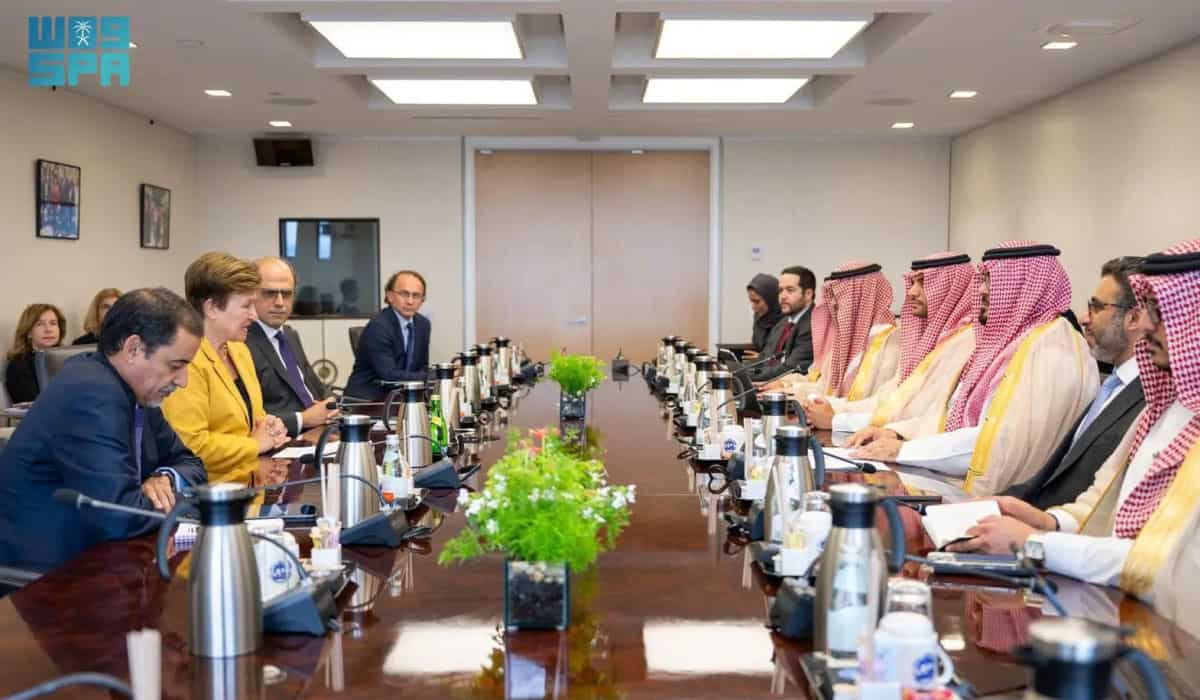
Riyadh, Saudi Arabia — His Excellency the Minister of Economy and Planning, Faisal bin Fadhil Al-Ibrahim, met with Kristalina Georgieva, Managing Director of the International Monetary Fund (IMF), to review the global economy and strengthen Saudi-IMF cooperation.
Strengthening Saudi-IMF cooperation under Vision 2030
The meeting explored global and regional economic trends, with both parties exchanging insights on growth forecasts, fiscal sustainability, and multilateral collaboration. Discussions focused on aligning IMF policies with Saudi Arabia’s Vision 2030 objectives, especially in areas such as economic diversification, financial reforms, and sustainable development.
Strategic policy alignment and institutional partnership
Minister Al-Ibrahim highlighted the Kingdom’s determination to deepen institutional coordination with the IMF. He outlined key achievements in Saudi Arabia’s economic transformation, including enhanced competitiveness, structural reforms, and increased international investment. The goal, he emphasized, is to reinforce the country’s position in global markets through policy synergy and strategic dialogue.
Senior officials emphasize strategic direction
The delegation included Deputy Minister Eng. Ammar Nagadi, Assistant Minister for Policies and Economic Planning Rakan Al-Sheikh, Dr. Yasser Faqih, General Supervisor of Research and Economic Insights, Hattan Munir bin Saman, General Supervisor of International Organizations, and Eng. Ismail Al-Salloum, CEO of the National Infrastructure Fund. Their participation underscores the high-level priority placed on Saudi-IMF cooperation as part of broader efforts to strengthen global economic governance.
The meeting reaffirms the Kingdom’s commitment to constructive international engagement and continuous improvement of its policy frameworks in collaboration with global institutions.
The Saudi Standard’s View: Labor Reforms Are Delivering Tangible Results
Saudi Arabia’s latest labor market data reflects more than economic indicators—it reflects a strategic transformation in action. The drop in Saudi unemployment and the record number of private-sector nationals employed underscore the impact of Vision 2030 reforms. What was once an ambitious nationalization goal is now becoming reality.
Beyond statistics, this momentum speaks to a cultural shift. More Saudis, especially women, are joining the workforce. Training programs and HRDF-backed initiatives are equipping youth with real opportunities. The increase in labor force participation, especially in high-growth sectors, reveals a future where inclusion and productivity go hand in hand.
But success isn’t guaranteed. Continued progress depends on policy continuity, private-sector adaptability, and closing gender gaps in quality employment. The state has built a strong foundation—it is now time to double down on matching jobs with skills, especially for young Saudis.