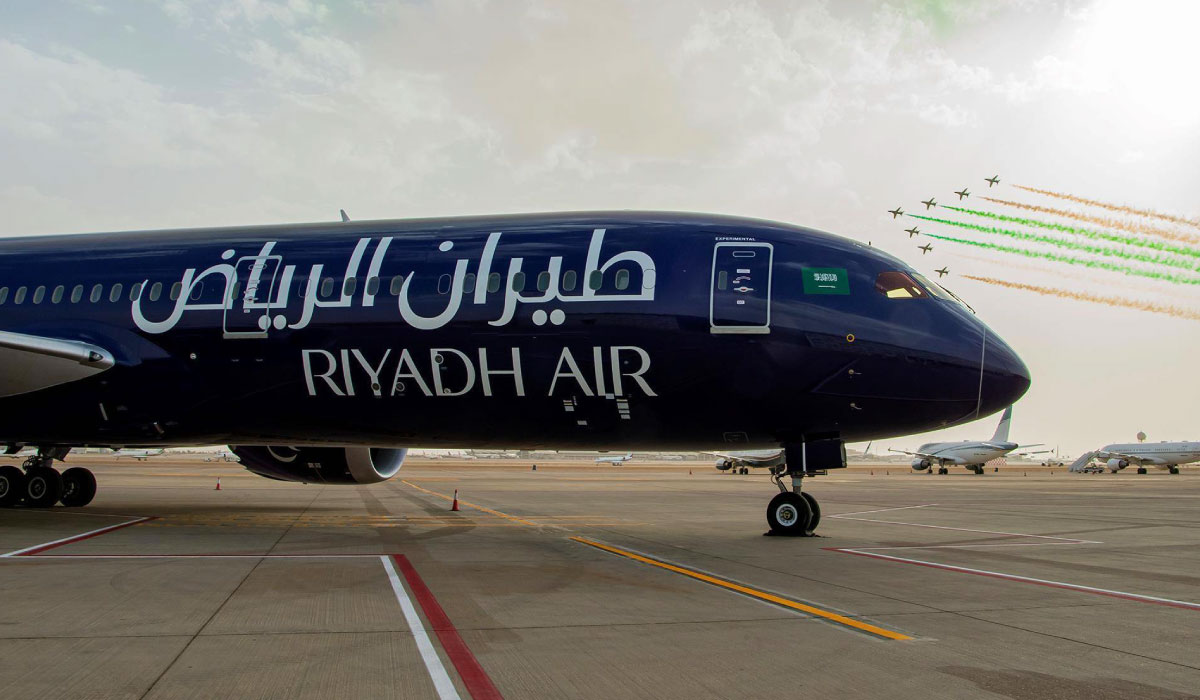
Riyadh, Saudi Arabia — Riyadh Airlines is preparing to redefine air travel through a strategic partnership with global AI consultancy Artefact. Together, they plan to integrate artificial intelligence across the airline’s operations to support Saudi Arabia’s Vision 2030.
This partnership focuses on building a dedicated platform for smart data analysis. The platform will deliver personalized guest services, enhance operations, and support real-time decision-making. These digital systems will also support dynamic offers across sales and customer service channels.
Setting New Standards in Aviation
According to Iyab Di, Vice President of Digital Services and Innovation, the airline aims to elevate the travel experience using smart technologies. “We are committed to creating a seamless, tech-enabled journey for every guest,” he said.
Artefact MENA CEO Rahul Arya described the collaboration as a leap forward for the industry. “By merging digital innovation with aviation expertise, we’re helping this new Saudi airline define global benchmarks,” he noted.
AI-Powered Growth Backed by Vision 2030
This digital transformation aligns closely with both the National Tourism Strategy and the National Aviation Strategy. By 2030, Saudi Arabia aims to serve 330 million passengers annually. As part of that goal, Riyadh Airlines will connect the Kingdom to over 100 international destinations.
The airline plans to launch its first commercial flights in 2025. Its focus on AI, guest-centric design, and operational efficiency will help position Saudi Arabia as a leader in smart travel solutions.
With strong digital foundations and a global vision, Riyadh Airlines is entering the market as a next-generation national carrier. They are ready to shape the future of flight.
The Saudi Standard’s View: Aviation Innovation as National Strategy
Riyadh Airlines’ digital-first approach signals more than a business launch—it marks a strategic inflection point in Saudi Arabia’s transport and tourism modernization. By embedding artificial intelligence into its operational core from day one, the airline is not retrofitting legacy systems. Instead, it is designing a future-ready aviation model built on data, personalization, and efficiency.
This model reflects a broader Vision 2030 imperative: to transition from service delivery to experience design. Through this, AI enables real-time customization, predictive operations, and seamless passenger journeys. In this framework, technology is not just an enabler—it is the value proposition.
Moreover, the partnership with Artefact shows how Saudi Arabia is attracting top-tier global expertise to co-create digital infrastructure. They are not importing generic solutions. Riyadh Airlines is not simply using AI to optimize—it is using AI to lead.
The national implications are significant. As Saudi Arabia seeks to serve 330 million passengers by 2030, smart aviation becomes central to managing scale and ensuring service quality. Additionally, it positions the Kingdom as a global hub. This is not a tech pilot; it is policy in action.