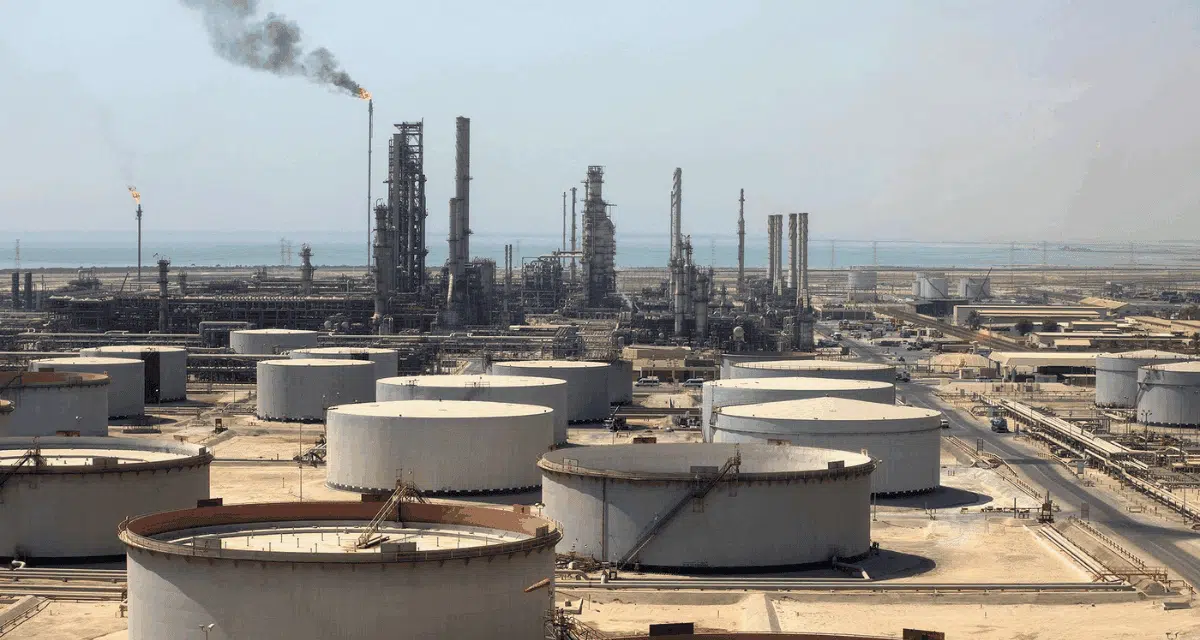
Dhahran, Saudi Arabia — Saudi Arabia’s oil exports surged to their highest level in over a year in June 2025, as the Kingdom moved more crude to foreign storage sites amid rising fears of Middle East supply disruptions.
Saudi oil exports in June 2025 rose by 450,000 barrels per day (bpd) to reach 6.33 million bpd, compared to May figures, according to data from Kpler. Exports could increase further in July, potentially reaching 7.5 million bpd.
The sharp increase comes amid concerns of regional supply risks linked to the Israel-Iran conflict and recent U.S. strikes on Iranian nuclear sites, as reported by Reuters.
OPEC+ Boosts Production as Saudi Arabia Targets Market Share
OPEC+ raised oil production quotas by 411,000 bpd for June. Industry sources suggest the group, along with Saudi Arabia, is now focused on regaining market share after years of coordinated supply cuts.
Saudi oil exports in June 2025 reflect a strategic response to shifting market dynamics. The Kingdom appears to be securing future demand by leveraging foreign storage and stabilizing global supply chains.
Market analysts note that this shift aligns with Saudi Arabia’s broader strategy to reinforce its position in the global oil market while carefully navigating geopolitical tensions.
The Saudi Standard’s View: Strategic Expansion Under Pressure
Saudi Arabia’s export surge in June 2025 underscores a deliberate effort to maintain market dominance amid escalating tensions in the Middle East. Moving crude to foreign storage signals proactive risk management as the Kingdom braces for potential regional supply shocks.
Rising exports not only address short-term market gaps but also reinforce Saudi Arabia’s influence within OPEC+. By increasing volumes while regional competitors face instability, the Kingdom secures its role as a reliable global supplier.
Ongoing coordination within OPEC+ will remain essential as Saudi Arabia balances output flexibility with market stability. The near-term outlook suggests that further strategic adjustments will be necessary as geopolitical risks persist.
Explore more on global oil supply shifts and Saudi export strategies
Read further on OPEC+ production increases and oil market dynamics