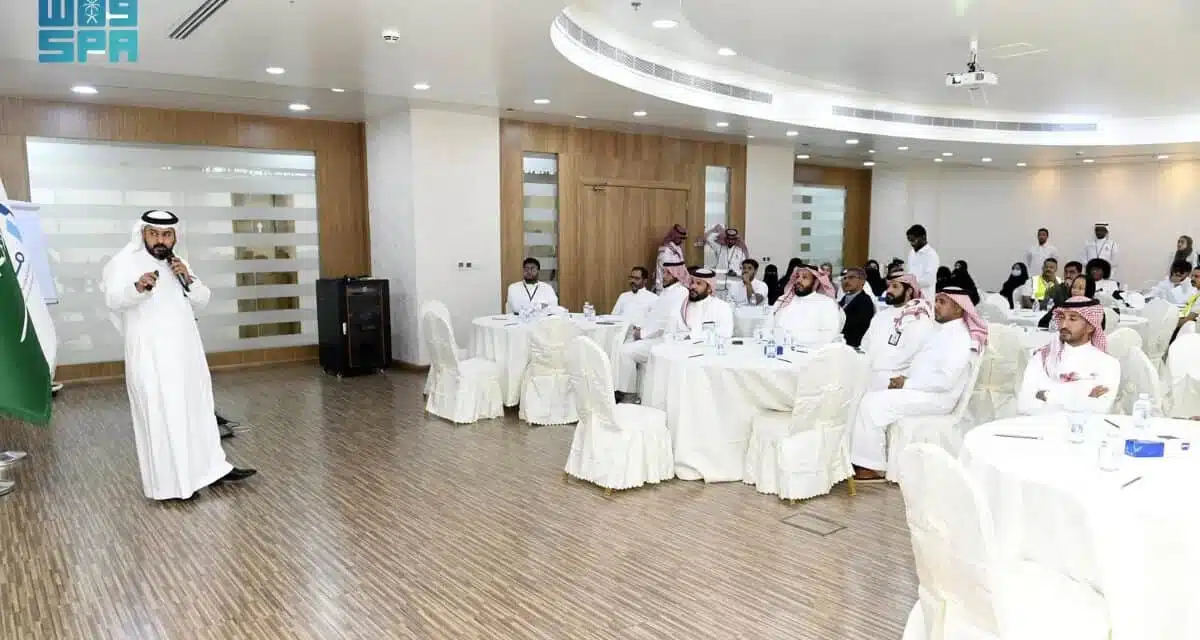
SPA — A workshop in Jeddah on July 15 brought together environmental experts and industry leaders to explore how smart buildings can drive sustainability in Saudi Arabia. Hosted by the Social Responsibility Association in Jeddah, the “Smart Buildings and Their Impact on Sustainability” event was organized in collaboration with the Ministry of Environment, Water, and Agriculture’s Makkah branch and the Saudi Authority for Industrial Cities and Technology Zones (MODON).
The event aimed to introduce participants to smart building technologies and their role in reducing energy consumption and carbon emissions. It also explored how integrating digital tools like IoT, AI, and automated systems can contribute to sustainable infrastructure aligned with Vision 2030.
Tech-Driven Infrastructure for Sustainable Growth
Attendees included professionals from government, the private sector, and civil society. They discussed how smart systems—such as real-time sensors for lighting, HVAC, and security—can improve efficiency and user comfort while conserving resources.
The workshop emphasized collaborative efforts between non-profits and private entities to scale up sustainable practices. Participants reviewed global case studies, focusing on converting traditional buildings into smart structures. They also examined how such innovations support Saudi Arabia’s transition toward energy efficiency and environmental resilience.
Moreover, speakers highlighted the importance of smart buildings’ sustainability in Saudi Arabia as a key pillar for improving urban quality of life and achieving national climate targets. With buildings accounting for a large share of energy use, smart technologies offer immediate and scalable solutions to reduce demand and emissions.
THE SAUDI STANDARD’S VIEW: Smart Buildings Workshop Strengthens Path to Sustainable Urban Development
The CSR Association’s workshop on smart buildings in Jeddah marks another strategic step forward in aligning Saudi Arabia’s urban planning and built environment with its Vision 2030 sustainability targets.
- Integrating technology with environmental goals: By showcasing digital solutions such as IoT, AI, and sensor-driven automation, the workshop underscores how data intelligence can drive energy efficiency, reduce emissions, and optimize resource use, mirroring international best practices in green infrastructure.
- Public–private–nonprofit collaboration as a catalyst: Co-hosted by MODON and the Ministry’s environmental arm, the event reinforces the Kingdom’s multi-sectoral approach to sustainability. Bringing together specialists, government bodies, and private entities signals a unified commitment to transforming urban systems through innovation.
- From pilot concepts to scalable impact: Highlighting real-world case studies equips stakeholders with actionable insights to retrofit existing buildings into smart, user‑centric environments, showing how visionary planning can turn sustainable infrastructure into an everyday reality across Saudi cities.
- Enhancing quality of life as a core pillar: Smart buildings do more than reduce energy use; they enable safer, healthier, and more comfortable spaces. This aligns with Vision 2030’s broader objectives around livability, ecosystem equity, and modern urban experiences.
In summary, by embedding sustainability in building operations through digital transformation, Saudi Arabia advances beyond traditional infrastructure to build smart urban ecosystems. This workshop reflects immediate strategic implementation and anchors future-ready, eco-conscious development as a cornerstone of the Kingdom’s national growth agenda.
Related Reading