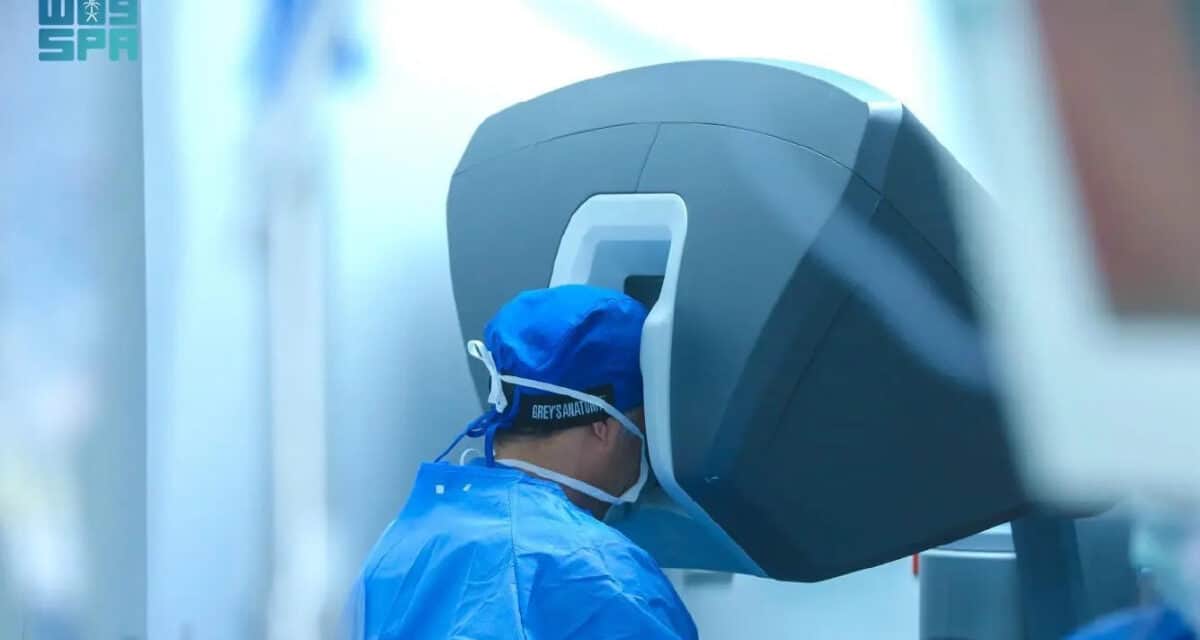
SPA — In a global first, King Faisal Specialist Hospital & Research Centre (KFSHRC) in Riyadh has successfully performed the world’s first robotic implantation of two artificial heart devices. The King Faisal robotic BiVAD surgery milestone sets a new benchmark in advanced cardiac care.
Robotic Surgery Transforms Bilateral Heart Failure Treatment
The innovative BiVAD-HMIII procedure offers hope to patients suffering from severe bilateral heart failure. Traditionally, this surgery requires a full sternotomy. However, KFSHRC’s team used robotic arms and minimally invasive incisions instead. This technique significantly reduced blood loss, lowered infection risks, and allowed faster recovery.
Led by Dr. Firas Khalil, the surgical team treated a 61-year-old man who had been bedridden for two months. He was ineligible for a heart transplant due to chronic conditions, including diabetes, kidney failure, and a history of stroke. In this case, robotic surgery provided a life-saving alternative. The team used 3D imaging and real-time surgical guidance to precisely anchor the heart assist devices.
King Faisal Hospital Leads Global Cardiac Robotics
This operation adds to KFSHRC’s record of medical firsts, including the world’s first robotic heart transplant and fully robotic HeartMate 3 implantation. As a result, its cardiac robotics program is now among the most advanced globally.
The hospital plans to publish the case in top medical journals and present findings at international cardiology forums. These efforts aim to support global knowledge-sharing and foster partnerships in robotic heart care.
Currently ranked the top academic hospital in the MENA region and 15th globally, KFSHRC also holds the title of the Middle East’s most valuable healthcare brand. It is widely recognized for leadership in robotic surgery, heart failure care, and academic research.
THE SAUDI STANDARD’S VIEW: King Faisal’s Robotic BiVAD Sets Global Benchmark in Heart Care
King Faisal robotic BiVAD surgery is more than a medical breakthrough. It is a bold statement of Saudi Arabia’s emergence as a global leader in healthcare innovation.
- A world-first that showcases national expertise: Performing this surgery in Riyadh confirms Saudi Arabia’s role as an innovator—not just an adopter—of advanced medical technologies.
- A direct contribution to Vision 2030 goals: The procedure aligns with national efforts to localize specialized care and position Saudi expertise globally.
- Improved outcomes through high-impact innovation: The minimally invasive method reduces patient risk, speeds up recovery, and lowers resource use, demonstrating clinical and operational excellence.
- A hospital driving global healthcare standards: KFSHRC’s growing list of achievements, international rankings, and research contributions reinforce its role as a global hub for advanced medicine.
In conclusion, this landmark surgery demonstrates the strength of Saudi Arabia’s healthcare system. It reflects the Kingdom’s ability to lead globally in medical science, while advancing national goals for innovation, resilience, and world-class care.
Related Reading