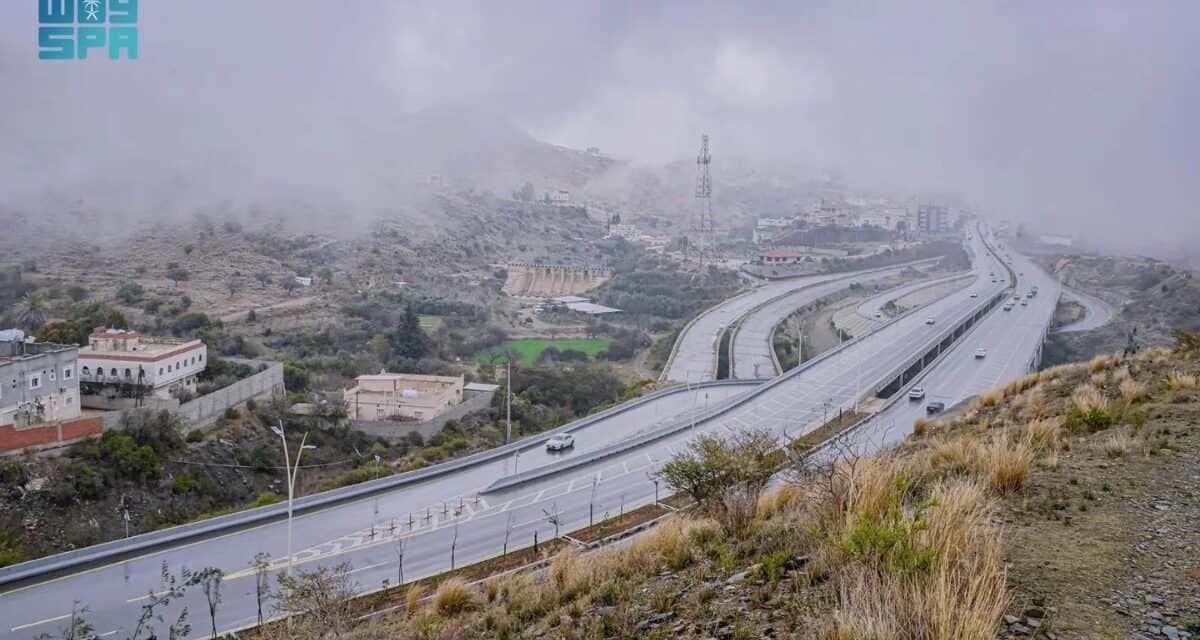
SPA — The Al‑Baha Land of Fog road network is transforming travel and tourism in one of Saudi Arabia’s most scenic and culturally rich regions. With over 1,570 kilometers of upgraded routes, access to the city’s highland villages, historic sites, and mountain forests has never been easier.
Surrounded by peaks rising to heights of up to 2,500 meters, Al-Baha is renowned for its rich biodiversity, deep-rooted agricultural traditions, and heritage landmarks. The cool summer temperatures, ranging from 17°C to 25°C, attract visitors eager for misty views and forested trails.
Al‑Baha Road Network Supports Heritage and Eco-Tourism
Key roads include the Al-Baha/Bani Saad (64 km), Taif/Al-Baha (223 km), and Al-Baha/Riyadh/Bisha (170 km) routes. These corridors now offer direct access to top destinations like Raghadan Forest, Khairah Forest, and Dhee Ayn village. Ongoing upgrades, led by the General Authority for Roads, feature resurfacing, new guardrails, and reflective signage to enhance safety.
This improved infrastructure supports mountain tourism by opening paths to ancient Stone Age sites, such as Al-Hurayta and Mount Al-Nayir. Dhee Ayn village, renowned for its stone houses and banana plantations, serves as a living testament to heritage preservation and rural development.
Agricultural Richness Adds Depth to Al‑Baha’s Tourism Appeal
Al-Baha’s landscape is as productive as it is picturesque. With over 700,000 pomegranate trees yielding 30,000 tons annually, the area also produces grapes, figs, almonds, apricots, and wheat. This output places Al-Baha at the center of Saudi fruit production and rain-fed farming traditions.
Cultural expressions such as “Al-La’ab,” “Al-Samer,“ and “Al-Ardah“ continue to thrive in festivals and village gatherings. Combined with easier road access, these traditions help position the region as a complete eco-cultural tourism destination.
Al‑Baha Infrastructure Balances Heritage and Modern Mobility
Notably, Al-Baha meets key UN sustainability indicators. Road projects are planned to protect the region’s natural and historical features. As a result, tourism infrastructure blends with the environment rather than disrupting it.
As visitor numbers increase, the upgraded roadways provide smoother routes to highland forests, ancient stone settlements, and public parks. The Al‑Baha Land of Fog road network now supports exploration of the region’s unique terrain, linking visitors to landscapes once hard to reach.
THE SAUDI STANDARD’S VIEW: Al-Baha’s Road Network Unlocks the Kingdom’s “Land of Fog“
Al-Baha’s lush highlands, ancient villages, and fertile valleys represent one of Saudi Arabia’s most treasured regions. Now, with 1,570 km of modern roadways in place, the “Land of Fog“ is stepping into a new era of connected, sustainable tourism.
- Strategic infrastructure anchored in tourism potential: Roads now link top attractions like Raghadan Forest, Dhee Ayn village, and Baljurashi Park. This opens up the region’s cool climate and rich traditions to more visitors seeking natural beauty and cultural depth.
- A model of sustainable regional integration: Al-Baha’s global recognition for environmental sustainability is matched by careful infrastructure growth. These upgrades align with Vision 2030 goals of equitable regional development and eco-tourism promotion.
- Reviving heritage through mobility: Better access to historic locations, including 16th-century Dhee Ayn and Stone Age ruins, helps preserve cultural identity. It also creates opportunities for local artisans, farmers, and businesses to thrive.
- Agricultural wealth meets modern logistics: With thousands of fruit trees and diverse crops, Al-Baha stands to benefit from improved transportation links. These roads improve distribution and open new channels for trade and food security.
In conclusion, Al-Baha’s infrastructure growth is more than a travel update—it’s a national example of how development can respect both nature and history. The upgraded road network connects fog-filled valleys with clear new possibilities, linking people, places, and stories across the Kingdom.
Related Reading
• Explore the latest Saudi tourism developments and infrastructure plans
• Read about expanding travel connectivity across Saudi Arabia’s mountain destinations