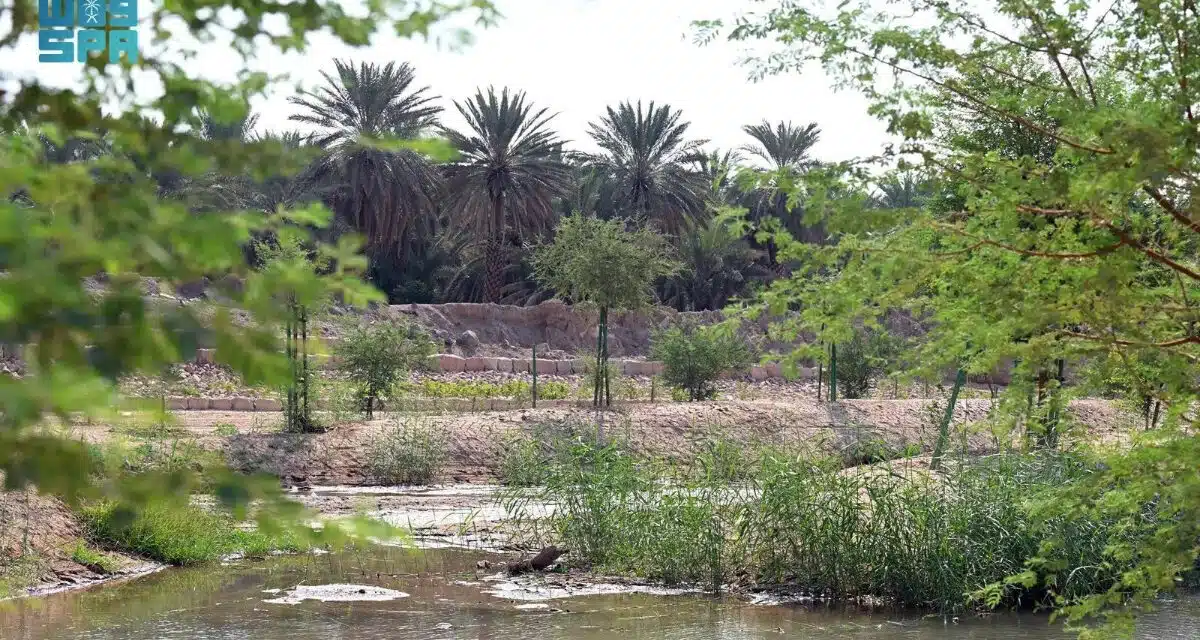
SPA — Wadi Qanah, one of Madinah’s most storied natural landmarks, stands today as a symbol of harmony between environmental preservation and urban development. Known for its deep historical ties to the early Islamic era, including its proximity to the site of the Battle of Uhud, Wadi Qanah Madinah has long been a defining feature of the city’s landscape.
Restoring a Valley of History and Nature
Stretching south of Mount Uhud and Mount Al-Rumah (Mount Aynayn), Wadi Qanah extends northwest toward the Al-Asiyal junction. Here, major valleys such as Bathan, Al-Aqiq, and Mahzur converge. Its name, derived from the Arabic word for “basin,” reflects its natural role in collecting and channeling water. This is a vital ecological function in the region’s arid climate.
Historical accounts trace Wadi Qanah’s significance over a century before the Prophetic era, when Tubba’ Al-Yamani is said to have visited the area. Over time, the valley became not only a geographical landmark but also a living record of Madinah’s environmental and cultural evolution.
An Integrated Environmental and Urban Vision
As part of a broader initiative to rehabilitate environmentally significant heritage sites, the Madinah Municipality launched a comprehensive restoration and development project for Wadi Qanah Madinah. The initiative included reinforcing sections of the valley’s banks. Furthermore, constructing open pedestrian areas and adding marble-paved walkways enhanced accessibility and public engagement.
The project’s design balances cultural heritage and ecological sustainability. A scenic overlook was built at the valley’s intersection with Airport Road, surrounded by a one-meter-high stone wall that preserves the land’s natural contours. Sustainable materials such as stone benches, waste bins, and planters were selected to integrate seamlessly with the surrounding environment.
Greening the Urban Landscape
Vegetation plays a key role in the revitalization plan. Palm trees and native greenery were planted throughout the site to enhance biodiversity, provide shade, and mitigate heat. Ground lighting was installed to make the valley accessible after sunset while maintaining low light pollution levels.
Through these efforts, Wadi Qanah Madinah now serves as a public space where environmental consciousness meets cultural continuity. It stands as an example of how historic landscapes can be renewed. Both ecological balance and community well-being are supported, reinforcing Madinah’s position as a city where history, nature, and modern urban life coexist.
THE SAUDI STANDARD’S VIEW: Wadi Qanah Revitalization Embodies Madinah’s Balance of Heritage and Sustainability
The transformation of Wadi Qanah into a restored historic green landmark reflects Madinah’s deep commitment to harmonizing cultural heritage with environmental stewardship. As one of the city’s most significant natural and historical sites, its revitalization underlines Saudi Arabia’s broader strategy. The strategy integrates heritage preservation within sustainable urban planning—an ethos central to Vision 2030’s human-centered development model.
• A Model of Sustainable Heritage Development
The Wadi Qanah project demonstrates how the Kingdom’s municipalities redefine urban design by embedding environmental sustainability into restoring historic landscapes. Reinforced valley banks, accessible pathways, and eco-sensitive materials preserve natural integrity and public usability.
• Environmental Stewardship Rooted in History
By reviving a site with ties to the early Islamic era and the Battle of Uhud, Madinah reinforces the principle that cultural heritage and environmental care are inseparable. The project transforms a historically sacred landscape into a living environmental classroom for present and future generations.
• Urban Greening and Ecological Renewal
Introducing palm trees, native plants, and low-impact lighting underscores Saudi Arabia’s growing emphasis on biodiversity, heat mitigation, and green urbanism. These features enhance residents’ quality of life while contributing to national climate adaptation efforts.
• Civic Engagement Through Public Spaces
The new walkways, scenic overlooks, and public seating areas exemplify how environmental design can foster social cohesion. Wadi Qanah is now a communal space that nurtures civic pride and environmental awareness among citizens and visitors.
• Vision 2030 in Action
This restoration reflects the practical realization of Vision 2030’s environmental and livability objectives—creating resilient cities that honor their history while preparing for a sustainable future.
Wadi Qanah’s revival is a testament to Madinah’s leadership in merging environmental innovation with cultural authenticity. It embodies Saudi Arabia’s evolving urban identity. Preservation, sustainability, and modern design combine to create cities that honor their past while shaping a greener, more vibrant future.
Related Reading