
Al‑Aqiq Farmers Harvest 40 Tons from 1,600 Date Palm Farms
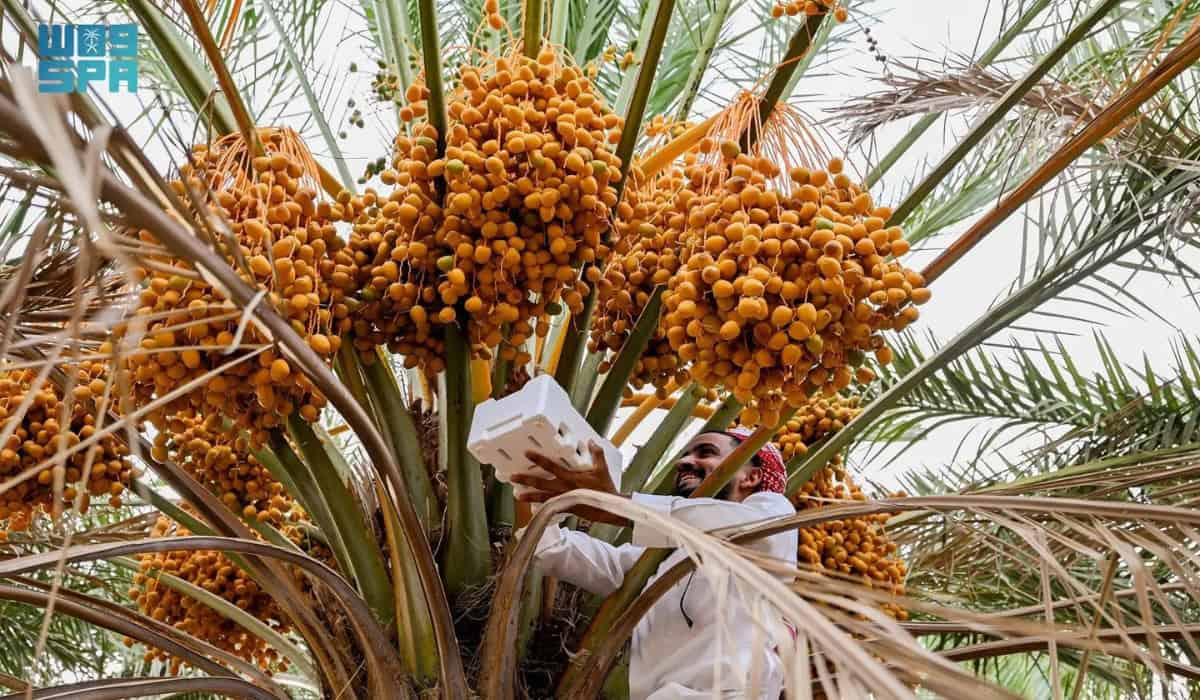
SPA — The annual “Khurfa” season has begun in Al-Aqiq Governorate, Al-Baha Region, where more than 1,600 palm farms are now harvesting high-quality dates. The Al‑Aqiq date palm harvest yields around 40 tons of dates each year, reinforcing the region’s role in Saudi Arabia’s expanding date industry.
Al-Aqiq’s 130,000 palm trees produce several prized varieties, including Safri, Khalas, Sukkari, and Barhi. The seasonal harvest marks both an economic and cultural highlight, attracting families, traders, and tourists while supporting local income.
Ministry Support Fuels Quality and Market Reach
Engineer Fahd Maftah Al-Zahrani, Director of the Ministry of Environment, Water and Agriculture in Al-Baha, emphasized the Ministry’s ongoing support for farmers. Through field workshops, technical guidance, and advisory services, the Ministry helps boost productivity and farming efficiency.
Moreover, key government programs aim to increase the market value of the Al‑Aqiq date palm harvest. These efforts promote sustainable farming and open new investment opportunities in the palm sector. They also support Saudi Arabia’s broader strategy to strengthen agriculture and food security.
Thanks to this steady support, Al-Aqiq’s farmers are preserving local traditions while contributing to the growth of the Kingdom’s global presence in the date market.
THE SAUDI STANDARD’S VIEW: Palm Sector in Al‑Aqiq Anchors Agricultural Diversification
The annual Khurfa season in Al-Aqiq, with 1,600 active palm farms producing 40 tons of top-quality dates, underscores the vital role of agriculture in Saudi Arabia’s Vision 2030 strategy. Dates are more than a cultural staple—they are becoming a pillar of rural growth and national food security.
- Regional agri-economy in action: Al-Aqiq’s 130,000 palm trees show the potential of Al-Baha’s farming sector. The consistent production of premium dates, such as Safri, Khalas, Sukkari, and Barhi, demonstrates the region’s favorable climate and advanced agricultural expertise.
- State-enabled agricultural resilience: Ministry-led workshops and technical training show a shift toward smarter, data-driven farming. These initiatives help farmers improve yield quality and stay competitive in expanding markets.
- Market integration and investment readiness: With more support for marketing and value-chain growth, Al-Aqiq’s date industry is ready for investment in packaging, logistics, and export channels. This aligns with national goals to scale SMEs and create jobs.
- Agri-tech and sustainability outlook: As Saudi Arabia moves toward more sustainable farming practices, Al-Baha can lead the way by example. Water-efficient systems and modern post-harvest practices will be key to long-term success.
In conclusion, Saudi Arabia’s palm sector blends deep heritage with new momentum. The Al-Aqiq date palm harvest proves that local agriculture can drive food security, rural livelihoods, and broader economic transformation.